Henry's rat poison
The CallerHenry's rat poison is a red box of lethal grains that Johnny Beskow finds while cleaning his grandfather Henry Beskow's pantry. Its appeal to Johnny lies in the tension between its harmless-looking contents and their fatal purpose: after studying the grains and reading the label, he hides the box beneath the seat of his Suzuki, keeping it as something that might prove useful.
Discovery in the Pantry
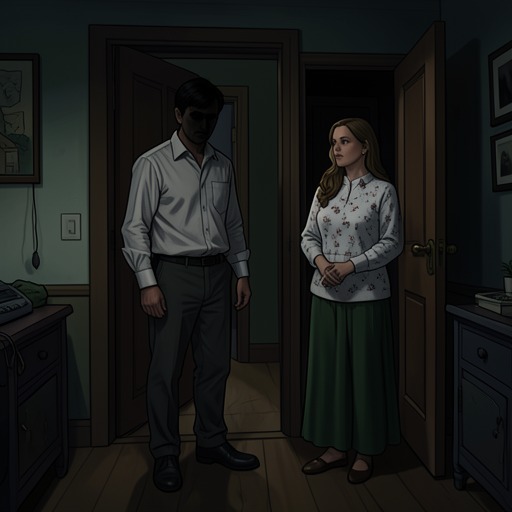
The box appears during an ordinary household task. After returning to Henry Beskow's home, Johnny sorts the pantry, a small room off the kitchen where his grandfather keeps assorted things. He notices old food and jam jars crusted with mould, then spends time clearing out what needs to be thrown away and wiping the shelves with a wet cloth. Once the room is neat, a red box tucked into a corner catches his attention.
At first Johnny mistakes it for a kind of breakfast cereal. Opening it, he sees pink grains that look appealing despite being lethal. The box therefore interrupts the practical rhythm of cleaning: what appears at a glance to be food is instead poison. The pantry's mixture of old provisions and household supplies makes the discovery seem like part of the room's ordinary contents, while the grains' appearance draws Johnny's attention to the danger concealed within an unremarkable container.
Inspection and Appeal
Johnny examines the contents closely. He lifts the box to his nose and finds that the grains have no scent. He cannot know how they taste, but imagines they might taste like sweets. Their resemblance to something edible does not make him overlook the danger; rather, the contrast itself fascinates him. He reads the ingredients and instructions carefully, attending to what the product does as well as how it looks.
The label states that rats who go to sleep after eating the poison will never wake up. Johnny responds by thinking that this is something to take note of. The wording gives the box a stark finality: an ordinary instruction about killing rats describes death as an irreversible sleep. In the scene, that promise is part of what makes the poison arresting to him, though the evidence does not explain his reaction beyond his fascination and his sense that the box may be useful.
Concealment and Retrieval
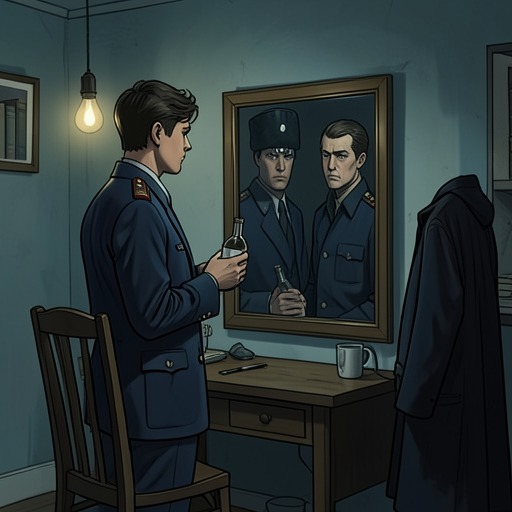
After considering the poison, Johnny takes it outside and hides it beneath the seat of his Suzuki. He does not leave it in the pantry or discard it after satisfying his curiosity. Instead, he deliberately puts it somewhere he can keep it, thinking that it could be useful and that he likes having something up his sleeve. He then returns to Henry, who is asleep in a chair, and waits patiently for him to wake. The movement back to this quiet domestic scene leaves the hidden box in contrast with Johnny's attentive care for his grandfather.
The box returns to the narrative later that evening. Johnny checks the date on a newspaper and rereads a birthday notice for Gunilla Mørk. When he looks into the living room, his mother is watching television with a pack of beer; later, after she has returned to the sofa, he sneaks out to the Suzuki and retrieves the rat poison. This sequence establishes that the hiding place is temporary and that Johnny chooses to recover the box rather than leave it where he concealed it. The evidence records the retrieval but does not, in these scenes, state what he does with the poison afterward.
Narrative Significance
The poison's significance develops through a change in Johnny's treatment of it. It begins as a suspiciously food-like object discovered amid stale provisions; his close inspection makes its physical qualities—red box, pink grains, lack of scent—conspicuous. He then converts it into a privately retained resource by hiding it beneath the Suzuki's seat and later returning for it. The object's movement from pantry to concealment and back marks a choice, not an accidental encounter.
The poison also joins the scene's domestic details to the possibility of harm without making the object itself act independently. Johnny reads its instructions, judges its possible usefulness, and decides where to keep it. Its ordinary packaging and candy-like appearance sharpen the contrast between familiarity and lethality, while the later retrieval leaves its purpose unresolved in the evidence here. Henry's rat poison is thus presented less as background household stock than as a dangerous object Johnny notices, considers, and keeps within reach.